What Documents Do You Need for a Cruise? The Complete 2026 Guide
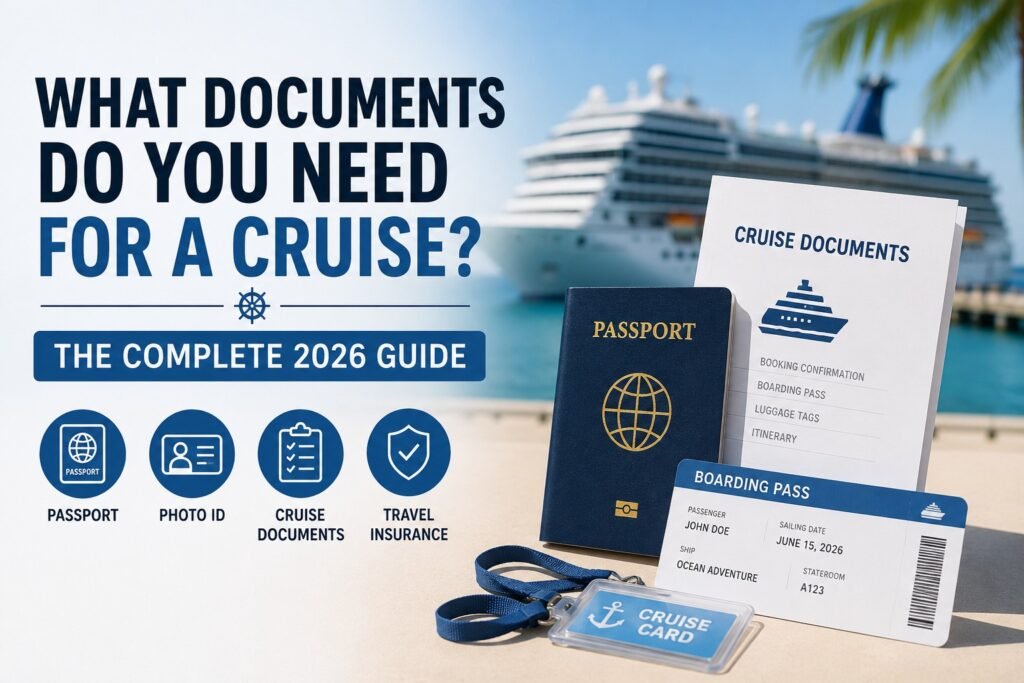
What Documents Do You Need for a Cruise? The Complete 2026 Guide
Meta description: Wondering what documents you need for a cruise? This complete guide covers passports, birth certificates, visas, and boarding IDs for every type of cruise — plus a helpful FAQ.
Packing for a cruise is exciting, but nothing derails a vacation faster than showing up at the terminal without the right paperwork. Cruise lines are strict about identification, and the documents you need can vary based on your citizenship, your itinerary, and even which port you’re departing from. This guide breaks down exactly what documents you need for a cruise, so you can check in with confidence and skip the stress.
Quick Answer: Cruise Document Checklist
At a minimum, most cruisers need:
- Proof of citizenship and identity (passport, passport card, or birth certificate + photo ID, depending on itinerary)
- Cruise boarding pass / e-docs provided by your cruise line
- Visas, if required for your destinations
- Vaccination or health documentation, if applicable
- Travel insurance information (recommended, not always required)
- A form of payment for onboard expenses
The exact combination depends on one key factor: whether your cruise is a closed-loop cruise or not.
Closed-Loop vs. Open-Jaw Cruises: Why It Matters
A closed-loop cruise departs from and returns to the same U.S. port without flying internationally to join or leave the ship. Popular closed-loop routes include round-trip Caribbean, Bahamas, and Mexico sailings from ports like Miami, Port Canaveral, and Galveston, as well as round-trip Alaska cruises from Seattle.
On these sailings, U.S. citizens can technically cruise with a birth certificate and government-issued photo ID instead of a passport. This is possible under the Western Hemisphere Travel Initiative’s passport exception for closed-loop itineraries.
An open-jaw (one-way) cruise — one that starts in one country and ends in another, or requires you to fly internationally to embark or disembark — does not qualify for this exception. If you’re flying overseas to meet your ship, sailing a repositioning cruise, or doing a one-way Alaska cruise through Canada, you will need a valid passport book.
1. Passports: The Safest Choice for Any Cruise
Even when it isn’t strictly required, a passport is the document cruise experts recommend most. A passport is the best ID document for travel, and yours shouldn’t expire for six months after your cruise ends. Many countries enforce this six-month validity rule strictly, and being turned away at a foreign port because your passport is too close to expiring is a real risk.
Why bring a passport even on a “no passport needed” cruise? If you miss the ship, get sick, or face an emergency at a foreign port, you may need to fly home internationally on short notice, and only a passport book allows you to board that flight. Travel advisors consistently recommend it for exactly this reason.
Passport vs. passport card: A passport card is a cheaper, wallet-sized alternative, but it may work for certain sea travel itineraries but cannot be used for international flights. If there’s any chance you’d need to fly home from abroad, stick with the full passport book.
2. Birth Certificates (For Closed-Loop U.S. Cruises)
If you’re sailing a closed-loop cruise without a passport, your birth certificate must meet specific requirements:
- It must be an original or certified copy — an original U.S. state-certified birth certificate or certified copy, or an original Consular Report of Birth Abroad from the U.S. State Department
- Hospital-issued certificates, baptismal papers, and certain older Puerto Rico birth certificates are not accepted
- It must be paired with government-issued photo ID (driver’s license, state ID, or military ID) for guests old enough to hold one
Guests age 15 and under are not required to present a photo ID — the birth certificate alone is sufficient for them.
3. Government-Issued Photo ID
For closed-loop cruises, your photo ID needs to be a valid, unexpired government-issued document such as a driver’s license, state ID card, or military ID. A few important notes:
- REAL ID is not required for boarding a cruise ship. REAL ID is used only for domestic air travel and access to federal facilities — it is not needed for cruise embarkation.
- However, if you’re flying to your embarkation port, you will need REAL ID-compliant identification or a passport to get through airport security.
- Starting February 1, 2026, the TSA charges a $45 fee to travelers who arrive at airport security without REAL ID-compliant identification — so check your ID before flight day.
4. Enhanced Driver’s License (EDL) — A Lesser-Known Option
If you live in Michigan, Minnesota, New York, Vermont, or Washington State, you may already have an Enhanced Driver’s License. An EDL serves as proof of both identity and citizenship for land and sea border crossings to Canada, Mexico, the Caribbean, and Bermuda, and is accepted for closed-loop cruises, though it cannot be used for international air travel.
5. Non-U.S. Citizens and Permanent Residents
If you’re a permanent resident sailing from a U.S. port, requirements are stricter. You’ll generally need your physical, original Permanent Resident Card (Green Card) along with a valid passport from your country of citizenship — photocopies of the Green Card are not accepted. Foreign nationals sailing from the U.S. should check both cruise line rules and current U.S. entry policies well before departure, since these can change.
6. Visas
Whether you need a visa depends entirely on your citizenship and your ports of call. Specific visas may be required for entry into some European, Asian, Australian, and South American ports — some must be obtained in advance, while others can be arranged onboard. Cruise lines typically publish itinerary-specific visa guidance, but it’s worth double-checking against your home country’s government travel advisories, since visa rules can change with little notice.
7. Cruise Line Documents (E-Docs and Boarding Pass)
Beyond government ID, you’ll need documentation from your cruise line itself:
- E-docs / boarding pass generated after online check-in, usually including your set sail pass, luggage tags, and health questionnaire confirmation
- Booking confirmation number
- Printed or digital copy of your itinerary, useful for immigration officials at some ports
Most cruise lines now handle this entirely through their app or website, so complete online check-in as early as it opens (often 90 days before sailing) to avoid delays at the terminal.
8. Health and Vaccination Documentation
Requirements vary by cruise line, itinerary, and current health guidance. Some destinations occasionally require proof of specific vaccinations (such as yellow fever for certain South American or African ports). Always check your specific cruise line’s health requirements page close to your sailing date, since these are the most likely documents to change on short notice.
9. Documents for Children and Minors
- On closed-loop cruises, U.S. citizen children under 16 can typically travel with an original or certified birth certificate alone
- On one-way or international cruises, children need a passport book just like adults, with no exceptions
- If a minor is traveling with only one parent or a non-parent guardian, many cruise lines and countries require a notarized parental consent letter — check this well in advance, as it’s one of the most commonly overlooked cruise documents
10. Name Matching Across Documents
If you’ve legally changed your name — through marriage, divorce, or other means — every document you present must match, or you’ll need to bring supporting paperwork like a marriage certificate or court order. Cruise lines flag mismatched names during check-in, so it’s worth reviewing this before you pack.
A Simple Pre-Cruise Document Checklist
- [ ] Valid passport (recommended for every cruise, required for open-jaw/international sailings)
- [ ] Birth certificate + photo ID (only valid alternative for closed-loop U.S. cruises)
- [ ] Passport card or EDL, if applicable to your route
- [ ] Visas for any required destinations
- [ ] Green Card + home-country passport (non-U.S. citizens/permanent residents)
- [ ] Cruise line e-docs, boarding pass, and booking confirmation
- [ ] Health/vaccination documents, if required
- [ ] Parental consent letter, if a minor is traveling without both parents
- [ ] Copies of all documents (physical and digital) stored separately from originals
- [ ] Travel insurance details
Frequently Asked Questions
Do I need a passport for a cruise? Not always. For closed-loop cruises that depart and return to the same U.S. port, U.S. citizens can use a birth certificate plus photo ID instead of a passport. However, a passport is strongly recommended on every cruise in case of a missed ship or medical emergency abroad.
What is a closed-loop cruise? A closed-loop cruise is a round trip that begins and ends at the same U.S. port without flying internationally in between. This pattern qualifies for a passport exception under the Western Hemisphere Travel Initiative, allowing citizens to use a birth certificate and photo ID instead.
Can I use a passport card instead of a passport book for a cruise? Yes, for closed-loop sailings. A passport card works for closed-loop cruises, while a passport book works for every type of cruise. Just remember a passport card cannot be used to board an international flight.
Do I need REAL ID to go on a cruise? No. REAL ID is not used for cruise border crossings — it is only required for domestic air travel and access to federal facilities. You will need REAL ID-compliant identification, though, if you’re flying to reach your embarkation port.
How long before my cruise should my passport be valid? Most cruise lines and destination countries require your passport to remain valid for at least six months after your cruise ends. Check your specific itinerary’s requirements, since this rule can vary by country.
What documents do children need for a cruise? It depends on the itinerary. On closed-loop sailings, U.S. citizen children under 16 typically only need an original or certified birth certificate, while on one-way or international cruises, children need a full passport book just like adults. If traveling without both parents, bring a notarized consent letter as well.
What if my name doesn’t match across my documents? If you’ve had a legal name change, bring supporting documentation (marriage certificate, court order, etc.) so the name on your ID matches your booking. Cruise lines will flag discrepancies at check-in, so it’s best to resolve this before sailing day.
Do I need a visa for my cruise? It depends on your citizenship and the ports you’re visiting. Specific visas may be required for entry into some European, Asian, Australian, and South American ports, and requirements can be obtained either in advance or onboard, depending on the destination.
What happens if I show up without the correct documents? Cruise lines are required by law to deny boarding to guests without proper documentation, and refunds are typically not provided in this situation. It’s one of the most common — and most avoidable — reasons travelers miss their cruise entirely.
Should I bring physical copies or digital copies of my documents? Both. Bring physical originals for boarding, but also keep photos or scanned copies stored securely online (such as in your email or a cloud drive) in case originals are lost or stolen during your trip.
Always confirm your specific document requirements directly with your cruise line before sailing, since rules can vary by itinerary and are subject to change.
Also read: The Downsides of Booking a Cruise at the Last Minute